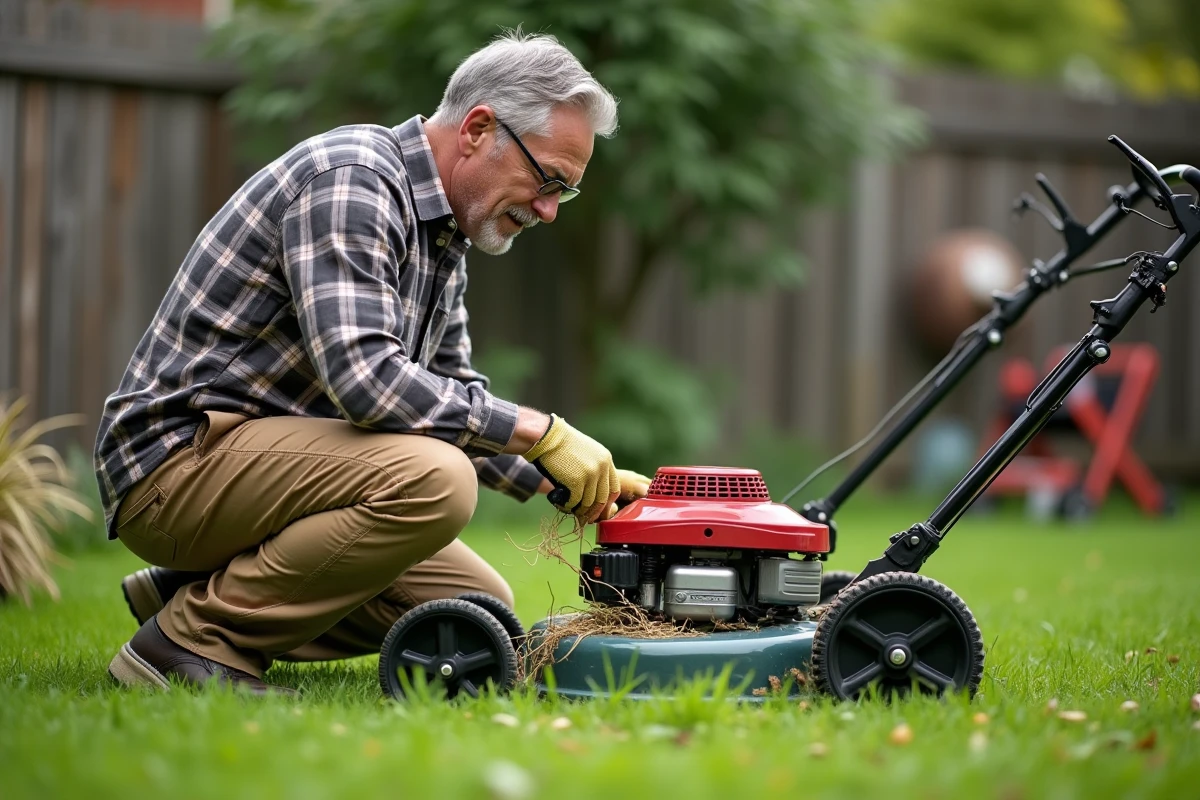
On paper, a well-maintained mower should glide smoothly over the lawn, with a sharp blade and a purring engine. But reality makes its presence known with every pass: sticky grass, repeated clogs, and a deck that turns into a plant nest. Nothing is more frustrating than seeing your machine lose efficiency due to a simple layer of green residue. However, a few concrete actions are enough to achieve a smooth cut, without clumps under the blade.
A thin layer of wet grass can quickly disrupt the blade’s rotation and force the engine to run at full throttle. Certain types of vegetation, particularly juicy ones, increase adhesion, even if you space out the mowings. Manufacturers sometimes warn against using knives or metal tools on the deck, a piece of advice that goes against the most common reflexes.
Neglecting maintenance can lead to overheating or a drop in performance within the first few weeks of use. Preventing these problems depends on both the model of the machine, the condition of the lawn, and recent weather conditions. Therefore, it is essential to adapt your methods to each situation.
Why does grass always end up sticking under the mower?
Moisture sneaks in everywhere, especially after rain or when the morning dew hasn’t dried yet. The cut grass then turns into a sticky paste that accumulates under the deck and on the blade. As soon as the sap is released, it acts as a natural glue and increases adhesion. Even on a lawn that appears dry, a hint of moisture is enough to trigger the phenomenon.
When the blade spins, it throws grass blades into the deck. If the grass lacks dryness, it clings and piles up. And the stickier it gets, the harder the mowing becomes, increasing the risk of clogging. On the edges and corners of the deck, the layer can quickly exceed a few centimeters, slowing down rotation and excessively straining the engine.
The material of the deck is not innocent: metal retains moisture, while models with a non-stick coating limit this inconvenience. A thick lawn, saturated with water after regular rains, exacerbates the issue. Mowing in dry weather helps avoid this plant crust, but the question remains: how to prevent grass from sticking under the mower when the weather isn’t favorable? The solution lies in keen observation of cutting conditions, rigorous maintenance, and a few concrete tips, which can be found in the article “Lawn Mower: How to Prevent Grass from Sticking, Our Effective Tips – Les Défricheurs”.
Simple tips that really make a difference when mowing
Before taking out the mower, coat the deck and blade with a bit of vegetable oil or cooking oil. This action creates a barrier that repels water and sap, thus limiting the formation of green deposits. Even filtered frying oil does the trick. However, be careful: ADEME advises disposing of used oil at a recycling center once the job is done.
For long-lasting effects, opt for a non-stick spray based on Teflon or silicone. These products effectively protect against grass accumulation and delay the appearance of deposits on the metal. On steel decks, dry graphite, like Slip Plate Dry Film Graphite Lubricant, proves to be very effective: it protects against rust while limiting that pesky sticky effect.
Mowing techniques and airflow: simple levers
Here are some practices to adopt to limit grass sticking under the mower:
- Always prefer mowing in dry weather. Wet grass tends to form a kind of paste that sticks and clings everywhere.
- Try mulching if your mower allows it: this method promotes airflow under the deck and reduces residue accumulation.
- Regularly check the condition of the blade and deck: a sharp blade ensures a precise cut, and a clean deck guarantees optimal airflow.
By combining these simple actions, you keep a mower operational, less prone to clogs and grass buildup. Mowing then becomes more regular, without blockages or power losses with each pass.

Focus on smart maintenance to keep a mower in top shape all season
After each mowing, equip yourself with gloves and a spatula to remove grass remnants from under the deck. If necessary, let it dry, then use a cloth or brush to finish the cleaning. This habit prevents sap from turning residues into glue and reduces accumulation under the machine. Also, remember to remove and empty the collection bag systematically. Compacted grass eventually ferments and clogs the discharge paths.
Don’t neglect the blade or moving parts. A sharp blade cuts cleanly, releasing less sap and limiting adhesion. Lubricate the shafts and joints, especially after prolonged use or in the rain. For gas models, perform an oil change every 25 to 50 hours of use, clean or replace the air filter, check the spark plug, and choose fresh fuel.
Store the mower in a dry place. Moisture accelerates rust, seizes mechanisms, and makes the grass even stickier the next time. Forget the pressure washer: it forces water into electrical circuits and promotes corrosion. Always disconnect the machine before disassembling anything. Working in an orderly manner, without haste, extends the life of your tool and ensures worry-free mowing.
By adopting these good habits, the mower regains its vitality, the lawn is neat, and the pleasure of mowing returns. The residues that stuck yesterday are just a distant memory. Who would have thought that a few precise actions would be enough to change the game?