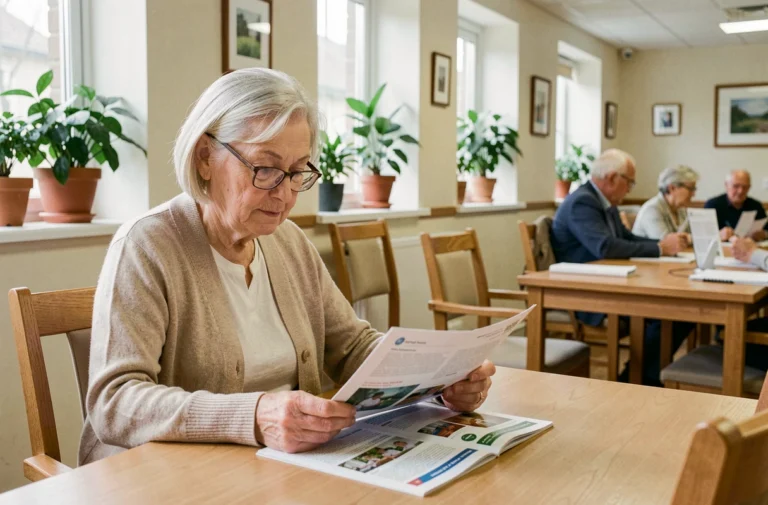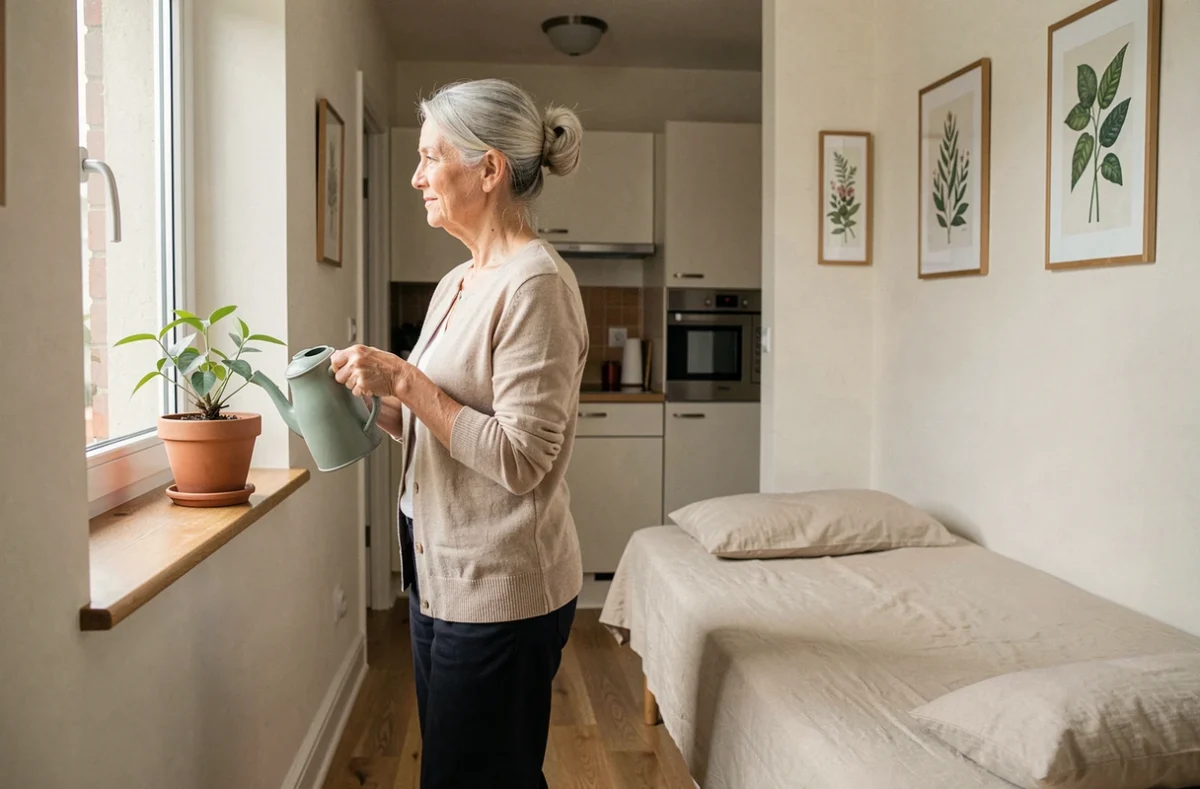
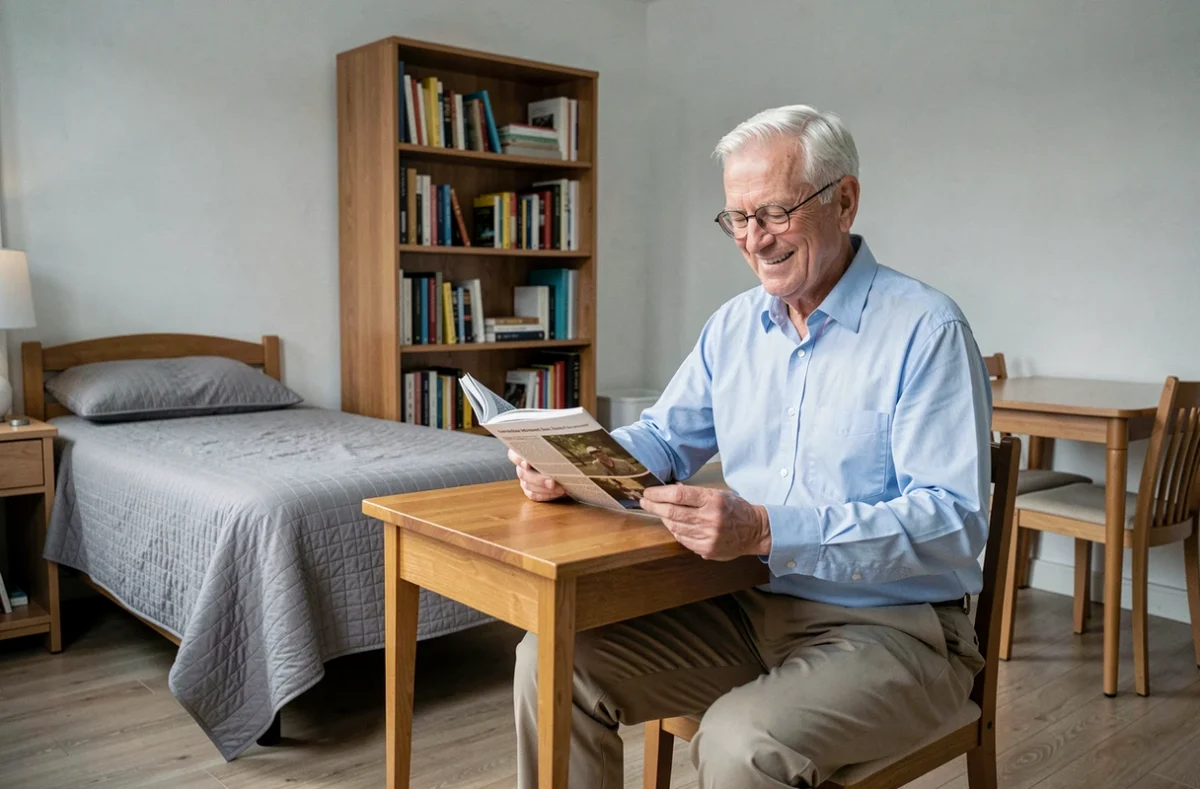
A studio in an independent living residence is a private F1 apartment within a community setting for older adults who do not need ongoing medical care. This type of housing combines an individual living space (sleeping area, kitchenette, adapted shower room) with shared services and communal areas. It differs from a standard apartment because of its accessibility standards, and from a nursing home because it does not provide intensive medical care.
Accessibility criteria that define a senior-friendly studio
A studio designed for older adults incorporates specific technical features to address the challenges of reduced mobility. These are not superficial comforts: they determine whether someone can genuinely live independently day to day.
A studio that complies with accessibility standards for people with reduced mobility includes several structural features:
- Wider doorways and step-free indoor access, allowing a wheelchair or walker to move around without obstacles.
- A level-access shower room with a walk-in shower, wall-mounted grab bars and non-slip flooring to reduce the risk of falls while bathing.
- A telecare system connected to a monitoring center, allowing residents to raise an alert if they feel unwell, including at night.
- Enhanced lighting in hallways and wet areas, often combined with motion sensors to reduce the need to move around in the dark.
These features are not optional in an independent living residence. They are part of the minimum mandatory services required under the regulations governing these social and medical-social care facilities.
Studio accommodation for seniors therefore meets technical specifications that clearly distinguish it from standard housing, even when renovated. The difference lies less in the floor area than in the overall design of the space.
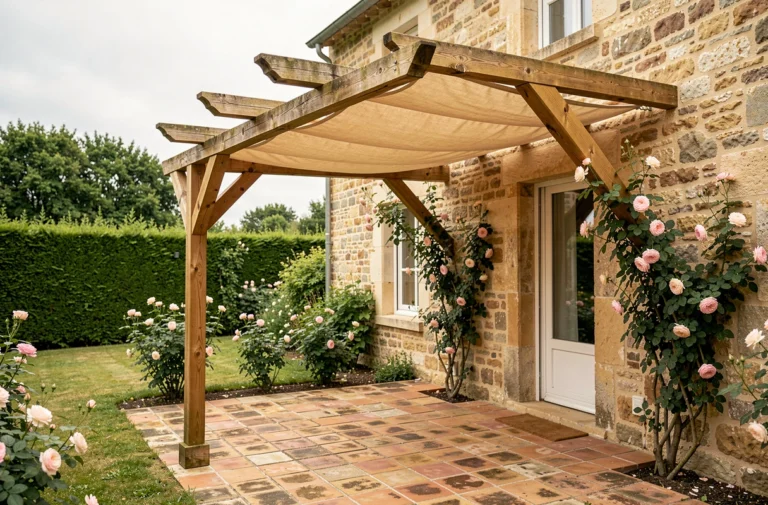
Independent living residences and garden studios: two options not to confuse
The term “studio for seniors” now refers to two distinct types of housing. The first is a studio in an independent living residence, a community facility usually run by a local authority or nonprofit organization. The second is a garden studio: a self-contained, habitable wooden unit installed on a family member’s property.
An independent living residence offers a structured social environment, with communal dining, activities, safety monitoring and shared spaces. It is intended for seniors classified as GIR 5 or GIR 6—that is, people who are independent or have low support needs. Admission involves a residency agreement and moderate rent, often lower than at privately run assisted living residences.
A garden studio, by contrast, functions as a separate unit next to a family home. It offers immediate proximity to relatives, but no shared services or social and medical support. The resident remains in a private home, without the support of a residential facility.
The choice between these two options depends on how much isolation is acceptable and how important daily social contact is. Someone who rarely goes out and has family nearby may find a garden studio suits them well. Someone who lives alone and has no close relatives available is more likely to benefit from the community life of an independent living residence.
Cost of a studio in an independent living residence and available financial assistance
Independent living residences have some of the lowest rates in the senior housing market, largely because they are run by public or nonprofit organizations. Rent covers the accommodation and basic services (reception, maintenance of shared areas and access to activities). Additional services such as meals, laundry and home help are charged separately, based on actual use.
Financial assistance available for senior housing
Several schemes can reduce out-of-pocket costs. Subject to income requirements, residents in independent living residences may qualify for personalized housing assistance (APL) or the social housing allowance (ALS). These benefits can be applied to the studio rent, as with any housing covered by an agreement.
For seniors considering adapting their current home instead, MaPrimeAdapt’ is an alternative worth exploring. This Anah grant can help fund home adaptation work (such as bathroom upgrades and improved accessibility) subject to certain conditions, for owner-occupiers and some private-sector tenants. It makes it possible to compare the cost of moving into a residence with the cost of renovating the home.
Tenants also have a specific procedure for requesting adaptation work from their landlord. A written request is sufficient: if the landlord does not respond within two months, the request is deemed accepted for work covered by the applicable regulations.
Inclusive housing: a third option between living alone in a studio and a communal residence
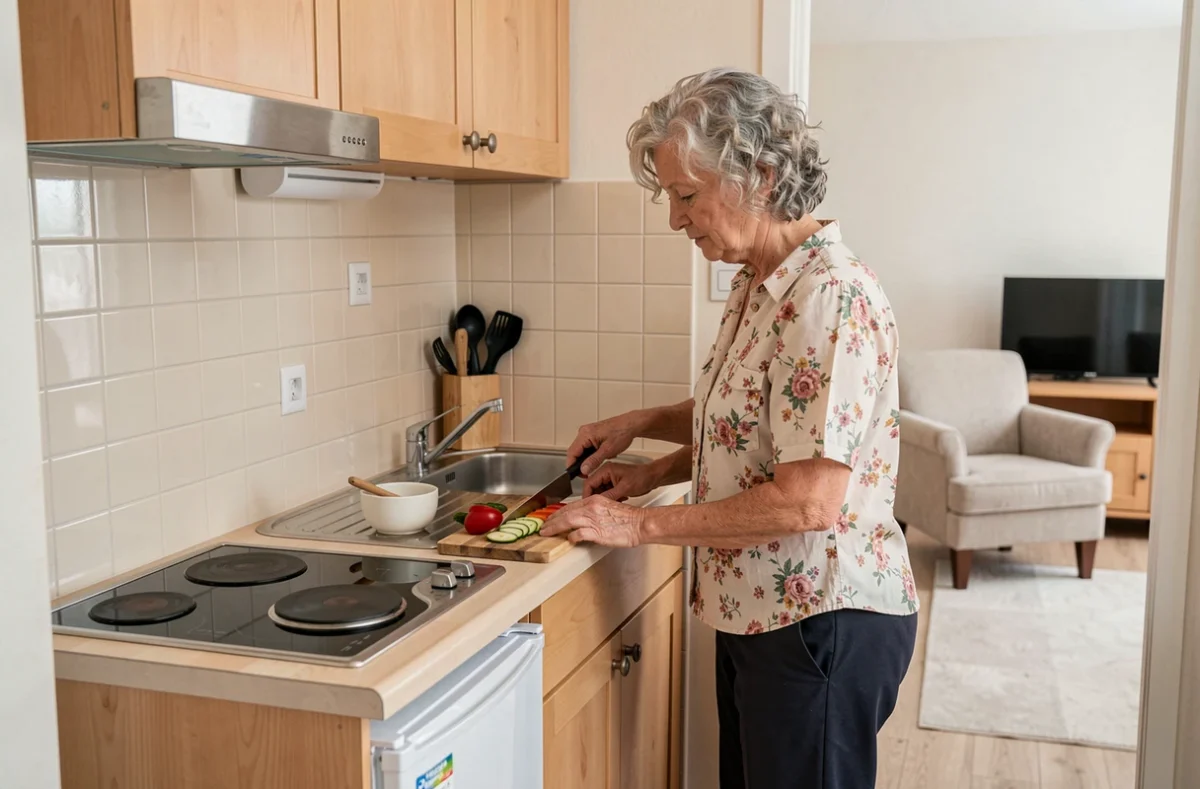
Inclusive housing is an intermediate option worth considering when exploring senior housing. It combines private homes with shared spaces and a social life project developed collectively by the residents.
Unlike an independent living residence, inclusive housing is not classified as a social and medical-social care facility. Care is not provided on site. Each resident remains a tenant or homeowner and is free to organize their day as they wish.
The main benefit is voluntary sharing: eating together, helping neighbors from time to time and organizing group activities. This model suits people seeking a balance between privacy and regular social contact, without the structured setting of a residence.
The development of this type of housing is supported through regular calls for proposals from the CNSA (National Solidarity Fund for Autonomy), reflecting public efforts to diversify support for aging at home.
An independent living studio remains the most structured option for an independent senior on a modest income. Garden studios and inclusive housing suit different needs and budgets. The key question is not comfort, which is broadly comparable across these options, but the social environment and level of services the person actually needs day to day.