In an era where environmental issues are at the heart of global concerns, the concept of sustainable development is gaining considerable importance. Acting locally has become a creed for citizens, businesses, and policymakers who wish to contribute to a greener future. This approach involves transforming daily behaviors, restructuring industrial processes, and revising urban planning strategies to minimize ecological impact while promoting economic growth and social well-being. The commitment of everyone at the local level is essential to drive significant global change.
Sustainable development, a global challenge that starts with local actions
Sustainable development stands as a major challenge of our time, an issue that transcends borders and engages humanity in its entirety. It is indeed at the level of territories that the transition begins concretely. In France, the awareness of the impacts of climate change on vital sectors such as agriculture highlights the need to adopt more environmentally friendly practices. These practices aim to respond to droughts, floods, and temperature variations that threaten the stability of our ecosystems.
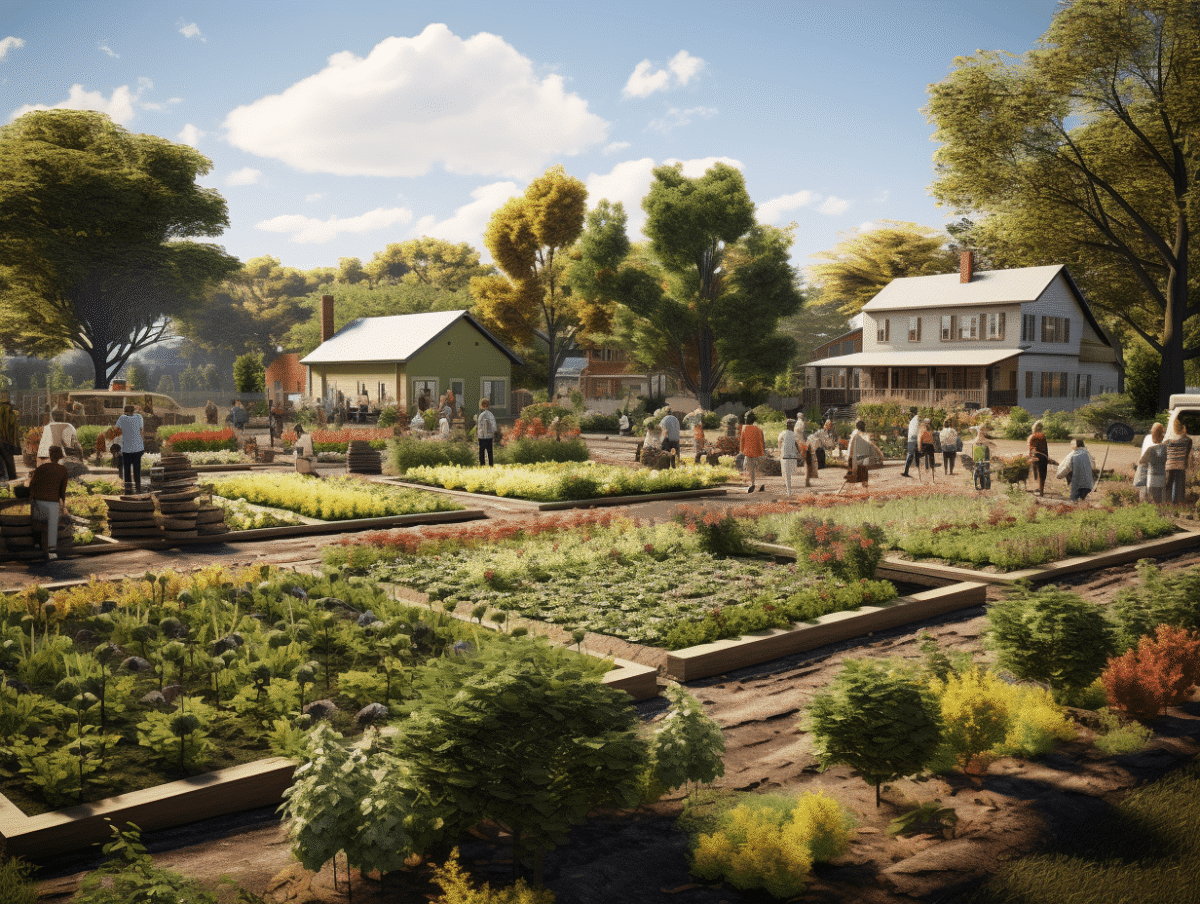
The relationship between the local and the global is thus intrinsic to the fight against climate change. Acting locally is not just a stylistic formula but an effective strategy that can trigger a dynamic of change. Initiatives undertaken in communities, whether establishing shared gardens or promoting short supply chains, are essential links in building a sustainable future. These actions, when multiplied and coordinated, have the power to transform the face of territories.
How can local initiatives contribute to a sustainable future? The answer lies in maintaining and developing practices such as peasant agriculture, which presents a viable alternative to intensive models. It promotes biodiversity, preserves natural resources, and supports local economies. The ecological transition thus finds in local actors true ambassadors of profound change, rooted in the realities on the ground.
Com FM, in its role as a catalyst for opinions, echoes these concerns and highlights the successes of the social and solidarity economy, which combines economic performance with social utility. This economy, often driven by small-scale structures but with considerable impact, is a pillar of sustainable social development. It embodies civic engagement and the desire to work for the common good, proving that every action, no matter how local, contributes to a transformation of global scale.

How can local initiatives contribute to a sustainable future?
In the face of the impacts of climate change, which manifest as droughts, floods, and temperature variations, local initiatives appear as essential levers for a successful ecological transition. These actions, when rooted in the social and economic fabric, not only address environmental challenges but also revitalize community dynamics. The maintenance of peasant agriculture, for example, proves to be an effective means of preserving biodiversity while ensuring food self-sufficiency for territories.
The social and solidarity economy (SSE) positions itself as a compelling model where local initiatives promote a sustainable future. It is based on principles of cooperation and resource pooling, in contrast to traditional economic models, often dominated by the pursuit of short-term profit. SSE structures, rooted in their environment, build a development that respects individuals and the environment, demonstrating the capacity of local actors to drive significant change.
The involvement of citizens in these initiatives is crucial. They become the architects of a sustainable social development, where each initiative, from participatory water management to the creation of renewable energies, contributes to a global societal project. Local engagement, driven by a desire to preserve the environment for future generations, transforms ecological constraints into development opportunities, perfectly illustrating the concept of think global, act local.