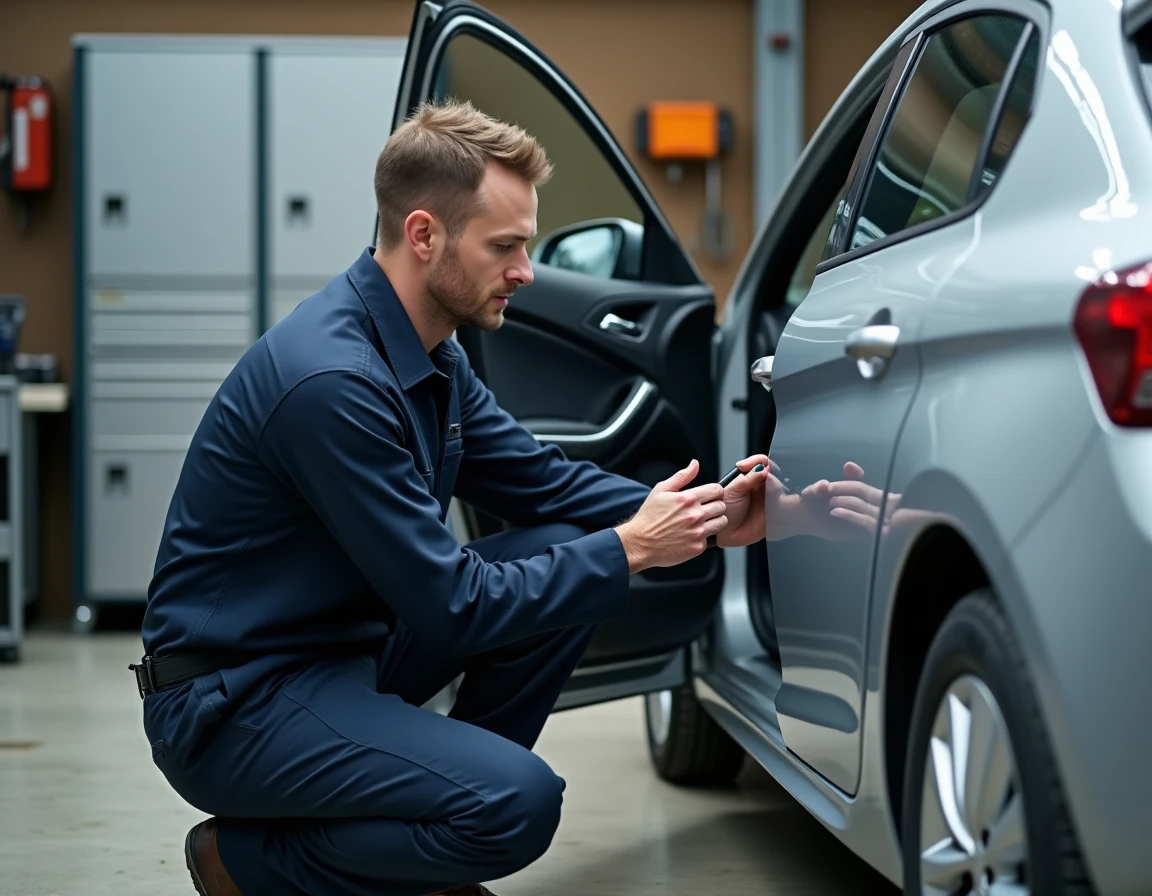
You press the button on your remote control, nothing happens. The doors of your Peugeot 308 remain silent. We all know that moment of uncertainty in a parking lot, key in hand, wondering if the problem is with the battery, the car, or something else. The central locking of the 308 can fail for very different reasons, and the trap is to replace parts without having identified the correct cause.
Central locking failure on Peugeot 308 after battery change or BSI update
This is a scenario that garages are seeing more and more often, especially on the facelifted 308 II models. You disconnect the battery to replace it, reconnect it, the engine starts normally, but the remote no longer locks anything. The reflex is to suspect a fuse or a door actuator, while the key has simply been deprogrammed on the remote side.
The same phenomenon occurs after a BSI (intelligent service box) update. The key is still recognized by the immobilizer, the engine runs, but the remote locking functions are lost. This is an incomplete programming: the BSI has “forgotten” the remote control aspect while retaining the starting aspect.
When encountering a central locking issue on Peugeot 308 in this context, the solution involves resynchronization rather than mechanical replacement. Several specialists recommend trying the manual procedure first before any paid intervention.
Resynchronization of the 308 remote: the procedure to test first
Before ordering a lock motor or making an appointment for a diagnosis, you can attempt a simple manipulation. It allows you to distinguish a programming issue from a real material defect.
- Manually close all the vehicle doors
- Turn on the ignition (in “on” position without starting the engine)
- Press the unlock button on the remote for about ten seconds
- Remove the key from the ignition and test the remote locking
If the central locking comes back to life after this manipulation, the problem was purely software-related. The key had lost its synchronization with the vehicle’s receiver. On the 308 II, this procedure is now considered a basic diagnostic step by key duplication professionals.
If nothing changes, the issue lies elsewhere. We then move on to material causes.
Incorrect key reference and non-compliant duplicate on 308 II
A less obvious but well-documented case by auto locksmiths concerns key duplicates made with an incorrect remote reference. On the 308 II, the car accepts the key for starting, but the central locking remains inactive or erratic if the reference of the remote shell does not match what the BSI expects.
In practice, you end up with a vehicle that starts without issue but can only be locked with the interior button or by physically turning the key in the lock. As long as the correct PSA reference has not been used and properly programmed via a diagnostic tool (Autel, AVDI, or Smartpro), the remote remains unresponsive.
How to identify this scenario
If the problem appeared just after the making of a duplicate, this is the first lead to explore. You can check the reference engraved on the original key shell and compare it with that of the duplicate. A difference, even minor, is enough to block the central locking functions.
Lock actuators and wiring harness: material causes
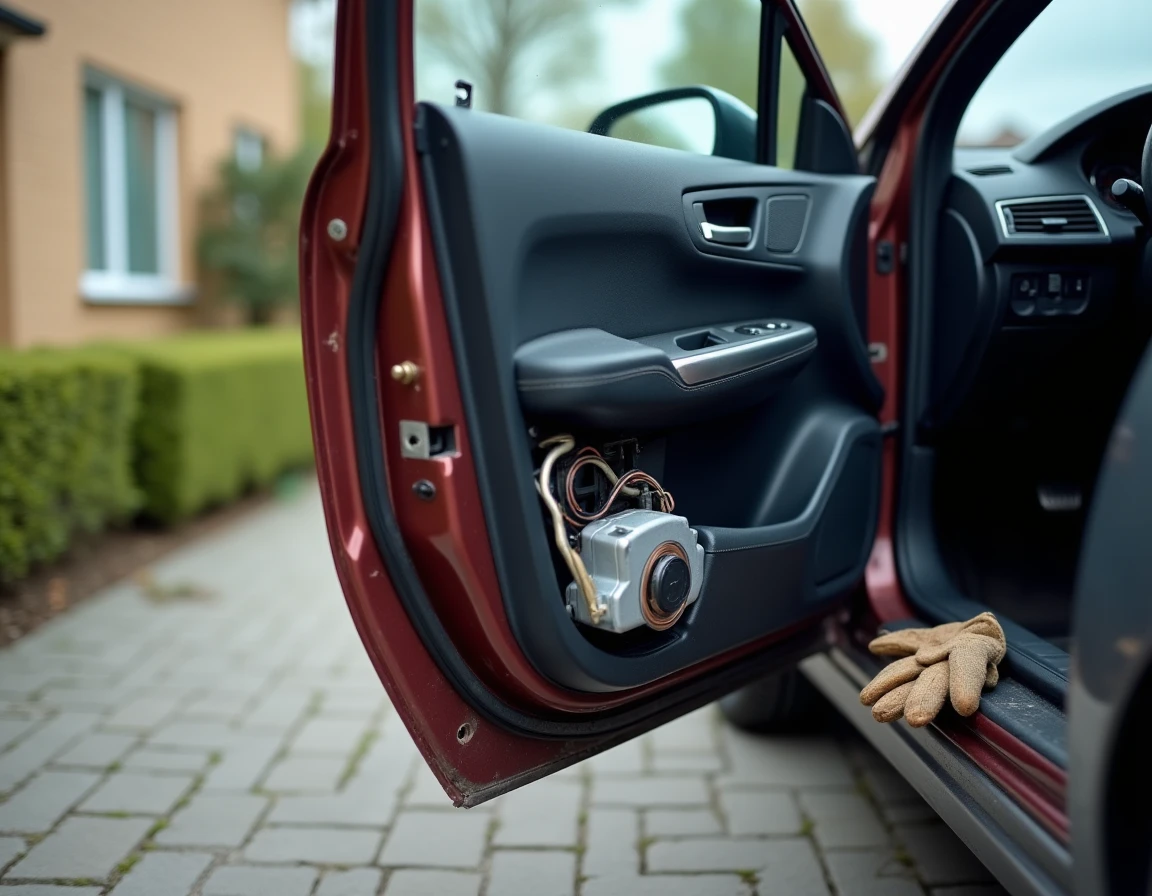
When resynchronization fails and the key reference is correct, we enter the realm of physical failures. The locking actuators (small electric motors housed in each door) eventually wear out. A faulty actuator often produces a characteristic symptom: only one door refuses to lock while the others function normally.
The wiring harness that runs between the body and the door is another sensitive point. The repeated opening and closing of the door puts stress on the wires, which can break after several years. This type of failure particularly affects the driver’s door, the most used.
Fuses and interior button: quick checks
Before disassembling a door, check the fuse dedicated to central locking in the cabin fuse box. A blown fuse cuts off power to the entire system. If the central locking works from the dashboard button but not from the remote, the fuse is probably not the issue: the power circuit for the actuators is intact, it’s the wireless communication that is problematic.
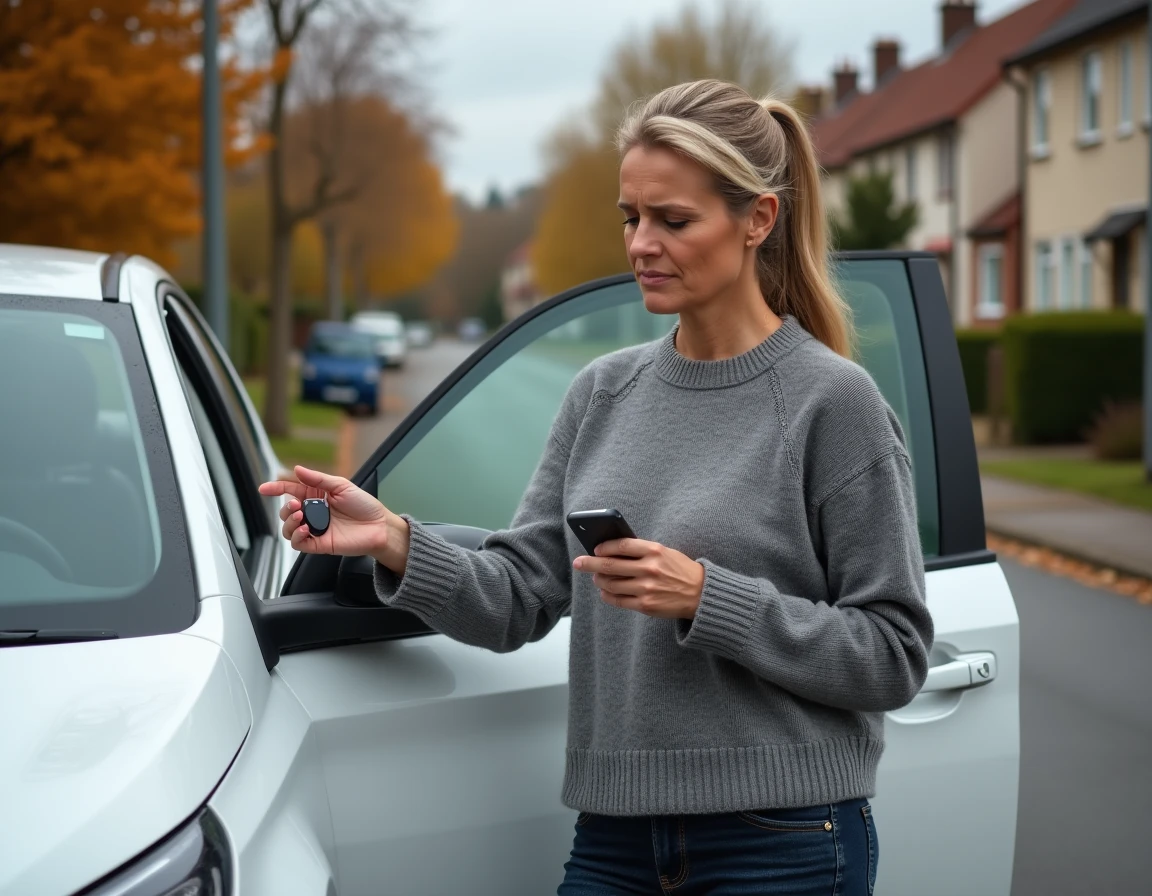
Diagnosis with OBD2 scanner on Peugeot 308: when it’s really necessary
Electronic diagnosis becomes essential in two specific situations: when an error message is displayed on the dashboard, or when none of the previous checks have yielded results. The OBD2 scanner allows you to read the fault codes stored in the BSI and identify the exact source of the blockage.
On recent 308s, reprogramming the key via a diagnostic tool resolves the majority of central locking failures that are not of mechanical origin. Feedback on costs varies by garage, but the manipulation itself generally takes little time for an equipped technician.
- Fault code related to the radio frequency receiver: resynchronization or replacement of the receiver
- Fault code related to a specific actuator: replacement of the affected lock motor
- No fault code despite the failure: check the door harness and connectors
The diagnosis avoids changing parts at random. On a vehicle where the electronics manage both starting and locking, reading the fault codes remains the most reliable way to target the intervention.
The central locking failure on a 308 is often resolved without replacing expensive parts. Testing the manual resynchronization before any other intervention allows you to eliminate the most common cause in just a few minutes, without tools or costs.